Jump to content
SingaporeBikes.com Telegram Now LIVE! Join NOW for the Last Reviews, News, Promotions & Offers in Singapore! ×
  • Join SingaporeBikes.com today! Where Singapore Bikers Unite!

    Thank you for visiting SingaporeBikes.com - the largest website in Singapore dedicated to all things related to motorcycles and biking in general.

    Join us today as a member to enjoy all the features of the website for FREE such as:

    Registering is free and takes less than 30 seconds! Join us today to share information, discuss about your modifications, and ask questions about your bike in general.

    Thank you for being a part of SingaporeBikes.com!

  • Latest SGBikeMart Adverts

    There have been no adverts submitted yet

  • SBF
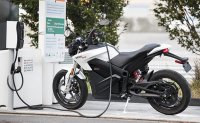
    Honda, Yamaha, KTM and Piaggio sign a letter of intent to set up a swappable electric batteries consortium for motorcycles and light electric vehicles. 
    ANNOUNCED on the 1st of March 2021, the four manufacturers (Honda, Yamaha, KTM & Piaggio) have signed a letter of intent to set up a swappable electric batteries consortium for motorcycles and light electric vehicles. 

    They will all collaborate on batteries that can be switched amongst their future electric model lineup, meaning a universal battery cell that can be used across all models. It may not be something that we see on the roads and in use any time soon, but it’s a clear sign of intent that they are all planning for the longevity of use for their electric vehicles, as well as promoting the use of electric power with increased availability.

    From the release: ‘The aim of the Consortium will, therefore, be to define the standardized technical specifications of the swappable battery system for vehicles belonging to the L-category; mopeds, motorcycles, tricycles and quadricycles. By working closely with interested stakeholders and national, European and international standardization bodies, the founding members of the Consortium will be involved in the creation of international technical standards.’

    This new consortium, however, will begin its activities in May 2021, and it seems invitations have been sent to other manufacturers to join their initiative. At the end of all this, we (the consumers) will likely win out, just as much as they do. A swappable battery across makes and models would mean ease of use and much quicker recharging times by physically swapping an empty battery for a full one - it's not a new concept by any means, but the big manufacturers jumping on board certainly signals their intent going forward.
    Noriake Abe, Managing Officer of Motorcycle Operations for Honda, said: 
     “The worldwide electrification effort to reduce CO2 on a global scale is accelerating, especially in Europe. For the widespread adoption of electric motorcycles, problems such as travel distance and charging times need to be addressed, and swappable batteries are a promising solution. Considering customer convenience, standardization of swappable batteries and wide adoption of battery systems is vital, which is why the four member manufacturers agreed to form the Consortium.
    Honda views improving the customers’ usage environment as an area to explore cooperation with other manufacturers, while bringing better products and services to customers through competition. Honda will work hard on both fronts to be the ‘chosen’ manufacturer for customer mobility.”
    Takuya Kinoshita, Executive Officer and Chief General Manager of Motorcycle Business Operations for Yamaha, said:
    “I believe the creation of this Consortium holds great significance not just for Europe but the world as we move towards establishing standards for swappable batteries for light electric vehicles. I’m confident that through work like this, the technical specs and standards, that currently differ by regional characteristics or the state of the industry in different markets will be unified, and, in the future, will help lead towards maximizing the merits of electric power for customers on a global level.”
    Electric motorcycles and scooters are the future whether you like it or not, and with such heavy investments by industry leaders, this can only mean good things for the future and competition and demands drives improvements and investments which is ultimately good for the end consumer. While it might not seem likely right now, an electric motorcycle could very well be the norm in the near future.


    SBF
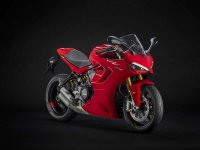
    The 2021 Ducati SuperSport 950 gets Euro 5 approval, an IMU, and fresh looks. Being closer to the Panigale V2 & V4 than ever, would this be the most value-for-money Ducati to get?
    It’s been four years since Ducati revamped the SuperSport. For 2021, it gets an overdue rework complete with updated styling, a contemporary electronics package, and a new name. Now dubbed the SuperSport 950, the road-biased sportbike from Borgo Panigale will appear in Singapore sometime over the next few months, and we will await for the latest confirmed pricing from Ducati Singapore - but expect it to cost quite a bit less than the flagship Ducati Panigale V4.

    Ducati Senior Designer Julian Clement, who penned the 2017 SuperSport as well as the Panigale V4 and Scrambler Icon, chipped away at his original design to give the SuperSport 950 an aggressive look more in line with the Panigale family. While the tank and tailsection appear unchanged, the front fairing and side fairings are new. The fairings feature prominent side extractors and the front end has a look reminiscent of the 1099/1199/899 Panigale.

    The redesigned extractors are inspired by the Panigale V4 and are designed to pull hot air away from the rider. The SuperSport 950 has the same 937cc Testastretta 11° engine as before, but it’s now Euro 5 approved. Horsepower and torque figures remain unchanged. Ducati claims the engine produces 110 hp at 9,000 rpm and 69 pound-feet of torque at 6,500 rpm. New for 2021, the SuperSport gets a hydraulic clutch, replacing the cable-actuated unit of the outgoing model.

    Other than the design, the big news is an updated electronics package featuring a Bosch six-axis IMU managing cornering ABS, traction control, and wheelie control. Ducati Slide Control, as found on the Hypermotard 950 and Panigale V4, is conspicuously absent—though perhaps not missed, considering the SuperSport is destined for neither hooliganism nor racetrack dominance. The electronics package has three ride modes to allow complete adjustability, as is Ducati’s MO. Adjusting parameters is simple thanks to the new 4.3-inch TFT dash.

    The SuperSport 950, like its predecessor, is available in a base and an S model. The latter replaces the 43mm Marzocchi fork and Sachs shock with a 48mm Öhlins fork and Öhlins shock.
    Heated grips, semi-rigid bags, and a taller windscreen are available as accessories. Given the price point and category, we’d love to see the SuperSport 950 come with cruise control and heated grips as standard. While heated grips are available as an accessory, it does feel rather uncharitable of Ducati not to include them, at least on the S model.
    Given its famous name, one can’t help but pause and consider the SuperSport’s lineage for a moment, especially in light of its new, aggressive looks. Specifics of the design, specifically the swooping LED headlight and front intake layout, are seen throughout much of the current Ducati lineup, suggesting a unifying design language intended to produce a strong brand identity.

    Parent company VW/Audi follows a similar strategy with its automobiles, so it’s interesting to see Ducati follow suit more than ever. That isn’t to say it’s necessarily a directive from corporate ownership, or that such a directive would be a bad thing. It’s not even a new strategy for the brand, but it’s becoming more and more realized across the range.
    In the ’90s, Miguel Galluzzi’s 900 Supersport and Massimo Tamburini’s superbikes shared the limelight without resembling each other even a jot, and were neither the better nor the worse for it. Please note: This observation contains no qualitative assessment or nostalgia, but is merely put forth as a point of contemplation for those sipping their morning espressos and daydreaming of Ducatis.

    SBF
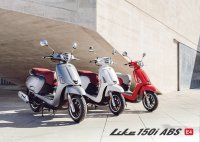
    KYMCO (Kwang Yang Motor Company) introduced their Like 150i, which is a perfect integration of retro, elegance and luxury in one machine. KYMCO Like 150i is a stunning blend of the classic styling that meets modern technology.

    Key improvements on the new Like 150i are a completely new 9.9KW, four-valve engine that boasts an impressive power increase over its predecessor (Like 200i), making it one of the most powerful scooter in its class. Further refinement has made the scooter smoother, quieter and that results in a more comfortable ride.

    Traditional telescopic front fork and twin adjustable shock absorbers at the rear. High rigidity, lightweight 12” wheels contribute to the Like’s agile handling. With nothing but the best in safety, the Like 150i is fitted with front and rear Bosch ABS brakes, the most reliable and fastest acting emergency braking system in the market.

    Modern features include LED lighting, USB charging ports and KYMCO’s Noodoe dashboard technology where you can pair your smart phone with the dashboard display. KYMCO’s Noodoe Technology is an interactive dash that connects your smart phone to the scooter, provides smart navigation, has a customisable dash display, allows the rider to create their very own display and shared through the Noodoe cloud – an online social community.

    KYMCO Singapore authorised distributor: Motor Sport Pte Ltd

    KYMCO Singapore
    Blk 3006 Ubi Road 1, #01-350, Singapore 408700
    Tel: +65 6281 9778
    For a limited time, Motor Sport Pte Ltd (Singapore’s sole authorised agent for KYMCO), is having a promotion that includes:
    SHAD 39L Box SHAD Carrier Handphone holder 1 x Raincoat 2 x GPR GK-09 **(Colour based on your bike choice) 1 x DVR DV-123 


    SBF
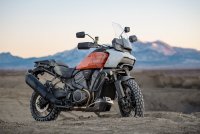
    Harley-Davidson just revealed the long-awaited Pan America adventure motorcycle, the company’s first foray into the highly competitive ADV space. This bike also marks the introduction of the (presumably) modular liquid-cooled V-twin Revolution Max engine that was shown in the Pan America, Custom, and Bronx concept bikes. It’s a big day for the MoCo.

    “From its inception more than a century ago, when many roads were little more than dirt trails, Harley-Davidson has stood for adventure. So, I’m very proud to present Pan America as the first adventure-touring bike designed and built in America,” said Chairman and CEO Jochen Zeitz. “The Pan America models exude that go-anywhere spirit, shared today by riders in the U.S. and around the globe who want to experience the world on a motorcycle.”
    First adventure-touring bike built in America? A moment of silence for the Buell Ulysses, please.

    I’ll get straight into the Pan America’s details in a second, but I think you should read the details with a price in mind. In the USA, the Pan America starts at $17,319. For reference, the base Honda Africa Twin is $13,999, the base Suzuki V-Strom 1050 is $13,399, the KTM Super Adventure S is $18,599 and the base BMW R 1250 GS is $17,995 if you could ever find one. The Yamaha Super Ténéré feels close in price and purpose at $16,299. Of course, there are many other ADV options out there, and to compare all of them against the Pan America would be an article in itself. These numbers are intended to give some reference for Harley’s positioning for this bike, especially for readers who don’t spend much time around adventure motorcycles. We'll check back with Harley Davidson Singapore to get our local pricing but expect it to be priced similarly to other premium ADV options from the likes of KTM and BMW.
    With that out of the way, let’s see what Harley’s got for us.

    The Pan America, “Harley-Davidson’s explore-it-all machine for riders who see touring as detouring,” weighs in at 534 pounds (242.2kg) wet in base trim. It’s powered by Harley’s new Revolution Max 1250 engine, a liquid-cooled, 60-degree, DOHC V-twin with variable valve timing and hydraulic self-adjusting lifters. It has a bore of 105 mm, a stroke of 72 mm, and a total displacement of 1,252 cc, breathing though a washable filter and a full stainless exhaust.
    The new engine has a 13:1 compression ration and wants 91 octane for best performance, though Harley says the knock sensor permits the use of lower octane levels if needed. Magnesium covers help keep the weight down.
    The Revolution Max 1250 produces 150 horsepower at 9,000 revs, with 94 foot-pounds of torque coming on at 6,750, all with an average fuel economy of 46 mpg (est. city/highway), according to Harley-Davidson. With its 5.6-gallon (21.2 litres) aluminum tank, the Pan America should be good for around 250 miles (402 km) per fillup. Happily, the Pan America includes cruise control as standard.

    The frame is actually three components that bolt to the engine: a forged aluminum “mid-structure” with steel trellis sections up front and under the tail. An aluminum swingarm, cast as a single piece, brings up the rear. The seat height can be adjusted from a high position (35.2 inches) to a low position (34.2 inches) without tools to suit a wider range of riders. More on that later, with the Special’s semi-active suspension.
    Styling and design
    The Revolution Max was built to be stiff enough to serve as a stressed member in the middle of the chassis, where it’s on full display. Harley didn’t want to hide their new engine or its clean, distinctive lines. In fact, take another look at how nothing crosses in front of the right “display side” of the bike except the exhaust. The left side has a little more going on, sure, but the overall execution manages a premium look in the utilitarian ADV space. Harley compared the styling to that of “a good multi-tool… function [leading] form.” The bike features integrated grab rails and luggage mounts for the adventuresome tourer. Wheelbase is among the longest in the class at 62.2 inches, which makes sense with Harley’s expectations for passengers and plenty of luggage.

    The production bike sports the same basic design we saw with Harley’s initial concepts: minimal bodywork, a stepped seat, radiator covers along the sides, and a polarizing bullnose that’s equal parts Road Glide and light bar. I think it looks tough with a U and two Fs. According to Harley, its wide shape is especially beneficial when off-road riding in low-light conditions. We see a similar windshield to the concept’s, too, now with four positions of adjustability that can be raised or lowered while riding with your clutch hand.
    The Pan America is available in two versions. Let’s look at the standard version first, then we’ll get into the up-spec Pan America 1250 Special and its additional features.

    Base Pan America 1250s are Vivid Black, like this.
    Braking and rider assists
    Harley made sure that the Pan America shipped with a suite of rider aids to stay competitive. “This broad collection of technologies is designed to match motorcycle performance to available traction during acceleration, deceleration and braking,” says Harley. Brembo supplies the dual radial monobloc calipers up front, as well as the master cylinder and adjustable lever.
    The touchscreen locks while riding to prevent distracted disasters. Pull over to use the touch feature or navigate menus while riding with the handlebar-mounted buttons.
    On the rider assist front, Harley bestowed the Pan America with their Cornering Rider Safety Enhancements package which includes (deep breath) “Cornering Enhanced Electronically Linked Braking, Cornering Enhanced Antilock Braking System, Cornering Enhanced Traction Control System, Cornering Enhanced Drag-Torque Slip Control System, and Hill Hold Control.” These systems use input from the bike’s IMU to stabilize the motorcycle and increase confidence. They are lean-sensitive, just like the rest of the flagship ADV bikes out there.

    The paint upgrade for the plain Pan America is this River Rock Gray. Look at how neatly the engine is framed from this angle.
    The Pan America’s five modes are also rider aids in their own way. You’ll get Road, Sport, Rain, Off-Road, and Off-Road Plus on the base model, with an additional two custom modes for the Special. 

    All these assists and features are managed with the Pan America’s 6.8-inch TFT display. This screen is touch-capable as long as the motorcycle is not moving; you’ll have to use the button controls by the handgrips for changes on the fly. The tilting, anti-glare dash connects with smartphones, as you’d expect, to handle calls and music, while navigation “is supplied by the free Harley-Davidson® App for iOS or Android.” Harley’s ride-planning tools came highly recommended in our motorcycle GPS article, so here’s hoping for more of the same. 

    The stock wheels and tires are suitable for light off-roading. If you look closely at the rider's gear, you'll see that Harley partnered with REV'IT! for branded ADV gear to match the new bikes.
    Wheels and suspension
    The Pan America’s cast wheels measure 19 inches in the front and 17 inches in the back, shod in Michelin’s new Scorcher Adventure tires that were developed specifically for this bike. They look like bulked-up Scorcher 32s to my eyes. Harley recommends moving up to the Anakee Wild for anything more than a fire road, and even offers them as a factory upgrade. Tubeless laced wheels are a $500 factory option.
    The base Pan Am has a fully adjustable, 47 mm fork and a preload-adjustable RSU, all from Showa. Harley claims the rear shock linkage keeps the rear suspension compliant enough for on-road duty, yet strong enough for thrashing in the wild. You’ve got seven and a half inches of travel here, with 8.3 inches of static ground clearance.
    The base Pan America will be available in Vivid Black or, for an additional $250, River Rock Gray. Read on if you want all the bells and whistles on your Harley ADV bike.
    Harley-Davidson Pan America 1250

    The Pan America 1250 Special is built to compete with the premium ADV crowd.
    For an additional $TBC and 25 pounds of weight, the Pan America 1250 Special is aimed at the premium ADV market. The big story here is Harley’s semi-active front and rear suspension with what they call “Vehicle Load Control,” or VLC. This system uses inputs from various sensors to automatically adapt the bike’s damping to “the prevailing conditions and riding activity.” The Special’s VLC can even weigh its rider, passenger, and cargo to instantly adjust the rear preload settings for optimum sag.

    Here's the white/orange design that we first saw on the concept. I don't think anyone will mistake it for a KTM.
    A factory-installed option called Adaptive Ride Height (ARH, +$TBC) can push these abilities even further. ARH gently lowers the bike to its shortest suspension setting at stops so that the rider can get a foot (or two) down. It’s fairly sophisticated, too, with plenty of customizability. The Pan America lifts back up once underway. 
    Other features include TPMS, a center stand, brush guards, a skid plate, an adjustable brake pedal, heated grips, wind deflectors, (another deep breath) a steering damper, and adaptive cornering lights.
    Maybe a small step for ADV, but one giant leap for H-D
    The Pan America’s success hinges on several factors. Will its specs, innovations, and real-world performance woo customers away from the other compelling options on the market today? How will the Harley community treat a liquid-cooled adventure-tourer that doesn’t have a square inch of chrome? And will dealers get on board with Harley’s new direction?
    One line stuck out to me in Harley’s presentation: “The fact that you’re being so polarized about it is a really healthy reaction to have.” These motorcycles will need more than spec-sheet speculation and a cinematic introduction video to be judged, and we can’t wait to get our hands on one for a future first ride review. Look for the Harley-Davidson Pan America 1250 and Pan America 1250 Special to arrive in dealerships starting in May 2021.
    2021 HARLEY-DAVIDSON PAN AMERICA 1250 AND PAN AMERICA 1250 SPECIAL Price (MSRP) $TBC Engine 1,252 cc, 60-degree, liquid-cooled, four-valve, V-twin Transmission
    final drive Six-speed, chain Claimed horsepower 150 @ 9,000 rpm Claimed torque 94 foot-pounds @ 6,750 rpm Frame Steel trellis, aluminum midsection Front suspension Showa USD 47 mm fork, adjustable for preload, compression, and rebound, semi-active option available; 7.48 inches of travel Rear suspension Showa monoshock, adjustable for preload, semi-active option available; 7.48 inches of travel Front brake Dual Brembo radial-mount calipers, 320 mm discs, ABS Rear brake Brembo floating single-piston caliper, 280 mm disc, ABS Rake, trail 25 degrees, 6.2 inches Wheelbase 62.2 inches Seat height 31.8 inches (laden with 180-pound rider) Fuel capacity 5.6 gallons (21.2 litres) Tires Michelin Scorcher Adventure, 120/70R19 front, 170/60R17 rear Claimed weight 534 pounds (base, wet) (242.2 kg) Available 2021 (TBC) Warranty 24 months More info https://harleydavidson.com.sg/


    SBF
    The article below is contributed by Robin Low (@mainman on SBF):
    Credits: https://robinlow.medium.com/electric-motorcycles-in-singapore-888adb754083

    We are probably not ready for disruption in Singapore yet.

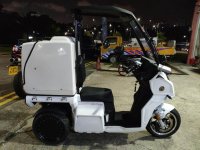
    Yes, the first registered electric motorcycle I’ve seen has arrived in Singapore, and no, it is not a Tesla or a Superbike — it is actually a very utilitarian Aidea AA-cargo — 3 wheeled bike.
    I’ve owned and ridden a Zero Motorcycle, and it feels exactly like a big motorcycle, except that it is completely silent, torquey, and has a short-range.

    Not a bad bike, easily goes 140km/h, but the range is only about 200km per charge.
    My other motorcycles have about a 300–400km range and go faster.
    I’ve owned many other motorcycles before, from old carbureted bikes, and now riding fuel injection motorcycles. And I’m curious about electric vehicles and how they start to progress.
    So after some research, here is some information to let you learn more about electric motorcycles (in Singapore).
    1. They need to adhere to international safety/homologation standards as well as local requirements.
    Like any vehicles that go on the road, they need to be homologated and pass certain standards. There are rigorously tested before you can even buy one. As electric vehicles are new, the standards are almost always engineered for safety.
    Unlike PMDs, homologated electric motorcycles need to go through more stringent tests and documentation needs to be submitted. When the electric motorcycle is homologated, you can buy the insurance and get a license plate to ride it on the road like any other motorcycle.

    2. Charging standards (Combined charging system, CCS).
    A nationwide electric vehicle (EV) charging standard TR25:2016 has been established for the EV charging system in Singapore, so all-electric motorcycles need to comply with that standard.
    Singapore adopted CHAdeMO and Type 2 charging. Under TR25, there are two national public charging standards: Type 2 (AC) (slow charging) and Combo 2 (DC) (fast charging).
    However, there are a few charging standards in the world. There are type 1 connectors and type 2 connectors. There are also Direct DC charging which are way more advanced that can change the way electric vehicles are charged. But don’t worry, many of these new electric vehicles are equipped with multiple connectors.
    Tesla also has their own charging standards which offer superfast charging.
    Charging electric vehicles is way more advanced (and heavy) than your normal charging of your PMD. All-electric vehicles will have Battery Management System (BMS) and it is responsible for managing the optimum performance of the battery pack.
    Overcharging and deep discharging can degrade the battery, and the BMS determines the right amount of current that can safely go in and communicates with the motor controller to prevent cell voltages from going too low. BMS also does cell balancing as the individual cells may hold charges differently over time.
    BMS will auto step down AC current and convert to DC for charging.
    In the case of the Japan Built Aidea electric motorcycle, it has a Japanese Quality Controlled BMS for charging, and another BMS for the battery which also monitors the temperature, voltages, and current as well.

    3. Motorcycle safety.
    All-electric motorcycles need to be tested for safety as well. The brakes, suspension, motors need to perform as they should. For now, the brake system is the same hydraulic disc brake system found in all motorcycles, so there is no difference between electric bikes and petrol bikes.
    For this bike, a standard three-wheeler bike or a trike. (Class 2B motorcycle) The width fits perfectly into a motorcycle parking lot and it is no different from any other trike.
    It has a windshield and a roof, and for our tropical weather, it also has windshield wipers and spray nozzles to clean off dirt and water for safer riding.
    The electric motors are also power rated, and there are generally 2 classes, L2e (Don’t need a license but not available in Singapore) and L5e (require a motorcycle license to ride on the road and the highway.
    Generally, electric bikes have a lot of torque, and they accelerate fast but don’t expect them to have a high top speed.
    Suspension-wise, most electric bikes need to be tuned to the weight. This Aidea electric motorcycle has a unique articulated tilting/suspension: a system for rear 2 drive wheels. So it can be quick, nimble, and safe.

    4. Storage Capacity.

    When you have a lot of torque, why not carry a lot of cargo?
    I feel that for now, electric bikes work great for delivery and logistics. With a lot of torque, they can carry a lot of loads.
    I feel that this Aidea AA-Cargo bike is a great example. It is a 3-wheel vehicle (13-inch large-diameter wheel — 1 front wheel and 2 rear) equipped with right and left independent rear suspension, windshield, wiper, and roof. It provides a large loading platform with a maximum loading capacity of 100kg.
    Fitting a big box in the rear with 2 wheels for stability, make delivery safer. The 2 wheels and rear suspension system is dedicated to load-bearing and has the best center of gravity to be stable.
    Is it time to buy an electric motorcycle?
    I feel that the technology is starting to get matured but local laws and the policy environment have not caught up yet.
    I do agree that driving/riding electric vehicles are 0 emission and great to go around with, but in Singapore, there is a lot of talks, hypes, and even fuel hikes, yet it still costs a lot to own one.
    e.g foreign countries have good incentives for owners to turn in ICE for electric motorcycles
    Like buying a hybrid car earlier, taxes do not make sense for cost savings unless you are in the logistic business. There will be a lot of cost savings if you ride 70km a day like a Singpost dispatch rider and the fuel cost you save will be significant.
    Currently, the insurance companies have not caught up and it will be hard to buy vehicle insurance. There are also not enough charging stations although when they are built, it would also mean that the early adopters can charge without any competition.
    Sadly, duties, reg taxes, and taxes already overwhelming the ICE with a zero growth, would create an even high entry barrier, especially for such safety and quality-built motorcycles like the Aidea, with a higher price, due to its tech and battery alike all EV.
    Even though the government seems to want to promote electric vehicles, policies make it a penalty for early adoption = until the dubious mfg come in like our PMD and PAB
    Robin Low

    SBF
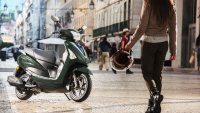
    Yamaha's Singapore official distributor and exclusive agent - Hong Leong Corporation, is having a special launch promo pricing and free goodies are included for the launch of the 2021 Yamaha D'elight 125!

    Yamaha Singapore Official Distributor

    Hong Leong Corporation - Yamaha Motor Singapore
    Address: 178 Paya Lebar Rd, Singapore 409030
    Phone: 6749 0588
     Click HERE to ENQUIRE now on the Yamaha D'elight 125! Special price for SBF members! 
    Price OTR (on-the-road excluding insurance): S$12,800
    Freebies: Rear Carrier Box + Rear Rack (and more! Enquire in-store for more information!)
    This nimble, agile, and LIGHTEST in its class 2B scooter weighs just 101kg and will be the ideal transport along Singapore's congested roads. The age-old debate on whether you need a Class 2B, 2A or 2 scooter in Singapore can be laid to rest if all you are looking for is a point A to B transport that is easy to handle and maneuver. Its lightweight also means that the power to weight ratio, fuel economy, will be best in class!

    The little scooter is an affordable bike, economical to own, and easy to ride (like most scooters, to be honest). The bike has a slim body and compact body, making it easy to park just about anywhere. It has pretty classic scooter styling that’s neither polarizing nor too boring. Powering the little bike is a 125cc Blue Core engine with a CVT transmission. That means it’s a twist-n-go machine.
     
    “Featuring a fresh and new unisex look, the latest D’elight scooter delivers all of the above—and much more! It’s the lightest urban commuter scooter, making it more enjoyable to ride and easier to maneuver—and the compact dimensions mean that it’s ideal for getting through traffic jams,” the product description reads.

    The model is equipped with a 125cc air-cooled engine capable of 8.4hp at 7,000rpm and 9.8Nm of torque at 5,000rpm. And just like the NMax 125, the performance and economy of the D’elight is enhanced by Yamaha’s Blue Core and Start & Stop technologies. Suspension components include an 81mm telescopic fork and 68mm unit swing, while a hydraulic single disc in front and mechanical leading trailing drum in the rear provide stopping power.
     
    The Japanese company claims that this is “the lightest scooter in its class” at just 101kg, despite the large underseat storage that can fit a full-face helmet. The 12-inch front and 10-inch rear wheels, as well as the lightweight six-spoke alloys, contribute to the bike’s weight-saving measures.

    Lastly, the scooter gets a complete makeover, featuring a redesigned front cowling and headlight that is more rounded, not to mention a new LED position lamp and flashers. Its analog meter also features an LCD screen and warning lights.

     
    The 2021 Yamaha D’elight 125 is available in Milky White, Power Black, and Velvet Green. For more product information, please refer to: https://www.hlcorp.com.sg/motorcycles/products_overview.asp?cat=1&id=146


    SBF
    Deliveroo said shares worth £50 million (SG$97.37 million) would be earmarked for customers, riders, and other stakeholders in its upcoming flotation, should it be successful, with the offer branded "Great food with a side of shares".
    The Amazon-backed food delivery firm announced plans on Thursday (Mar 4) to list in London, with a potential value of US$7 billion making it the biggest market debut in Britain for three years.

    Deliveroo will be setting up a "Thank You Fund" to give back to its food delivery riders and partners as part of an appreciation gesture of sticking with the company throughout the years. The payout is very rationally based on the amount of tenure served with Deliveroo as well as the number of orders delivered, which also means that to be eligible for a higher-tier payout, riders would need to stick with Deliveroo for now and complete as many orders as possible.

    We reported last week on AirAsia's massive push for the food delivery in the Singapore market by promising one of the highest payout per delivery, and this article happened to be one of the most read article we've had in awhile so we are certain that this 'war' between the food delivery giants is getting more heated as the big 4 - FoodPanda, Grab, Deliveroo, AirAsia start to hustle for more riders to be exclusive to them.

    DELIVEROO THANK YOU FUND
    Deliveroo said it would also recognise the role played by its delivery riders in its success with a £16 million (SG$29.89 million) reward programme to be launched on the day of listing.
    The Thank You Fund will be available to active riders in Deliveroo's 12 markets, with riders eligible based on the number of orders they have delivered.
    "There will be payments of S$18,500, S$1,850, S$925, with all riders who have worked with Deliveroo for at least one year and completed 2,000 orders receiving S$370," said the company in a press release.

    Payments will be calculated by reference to the number of orders completed, with the largest payments going to riders who have completed the highest number of orders in each market.
    The percentage of riders eligible for each award will be consistent across all markets, it added.
    The average payment for each eligible rider will be S$815, while hundreds of active riders globally are set to receive the largest payment of S$18,500, said Deliveroo.
    The company expects more than one-quarter of Deliveroo's global rider fleet to benefit from the scheme, with more than 36,000 riders globally receiving cash payments.
    "Riders are at the heart of our business, and we want to reward their efforts that have helped Deliveroo become what it is today," said Shu.

    "Over the last year riders have helped us do so much more than just deliver great food, having supported businesses and enabled vulnerable people or those self-isolating to stay safe indoors throughout a global pandemic. We're pleased to be able to say thank you."
    Although details are scare at the moment, once we find out how riders can apply for this scheme, we will update it here immediately so be sure to check back on SingaporeBikes.com to see how you can get your hands on this if you're a Deliveroo rider!

    More from Founder & CEO - Mr Will Shu
    Founder and chief executive Will Shu said Deliveroo's customers had supported the firm's growth and he wanted to give them the chance to share in the next stage of its journey.
    "Far too often, normal people are locked out of IPOs, and the only participants are the institutional investors," he said on Sunday.
    "I wanted to give as many customers as possible the chance to become shareholders, which is why we're making £50 million of shares available to them, alongside our restaurant partners and riders."
    Russ Mould, investment director at online platform AJ Bell, said a year of lockdowns had fuelled demand for companies like Deliveroo and there was an expectation that habits formed during the pandemic would remain long into the recovery.
    "All this suggests there is likely to be a bun fight for the £50 million worth of customer shares in Deliveroo at the IPO offer," he said.
    Article courtesy of Channel News Asia.

    SBF
    Budget Direct Insurance is back with another SPECIAL offer for SingaporeBikes.com members for the month of March 2021! When you sign up for a new comprehensive insurance policy online for your motorcycle with Budget Direct, you stand to get a $50* NETS FlashPay card with your policy! PROMO code: SHIOK 
    SIGN UP NOW for this awesome deal via this link (or click on the picture below)!!
    🏍️ Exclusive Online Offer on Singapore's Cheapest^ Comprehensive Motorcycle Insurance for Safe Riders!
    Get $50* NETS FlashPay card when you buy a new Comprehensive Motorcycle Insurance policy online with promo code SHIOK by 31 March 2021.
    You can buy your new policy 60 days before its start date.
    ^Based on an independent consumer research study. 
    *Terms and conditions apply. 


    SBF
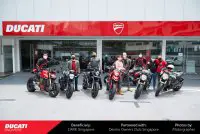
    In the spirit of giving, the guys at Ducati Singapore spent a fulfilling Saturday, on the 20th of February 2021, with their fellow Ducatisti to share the joy of this Lunar New Year festivity to children from under-privileged families.

    In partnership with Desmo Owners Club Singapore, CARE Singapore and @Motorgrapher, Ducati owners contributed and personally distributed over a hundred welfare packs to the beneficiaries and their families.
    Thank you to all Ducatisti for your generous giving, and for making this happen with your little act of kindness that spreads a lot more joy! And kudos to Ducati Singapore for putting the event together!
    P.S. All events were carried out with safe distancing measures in place.
    Links:
    Ducati Singapore: https://www.facebook.com/DucatiSG
    Desmo Owners Club Singapore: https://www.facebook.com/desmoownersclub.sg/
    CARE Singapore: https://www.facebook.com/CARE.Singapore/
    Motorgrapher: https://www.facebook.com/motorgraphersg/


    SBF
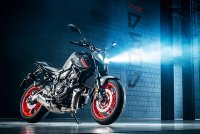
    Class 2 bikes in Singapore have always had the reputation of being too powerful, too heavy, or impractical for Singapore's roads. When you think of Class 2 bikes you usually think of the 1,000cc+ monsters like the Suzuki Hayabusa, Yamaha MT-10, or the Honda CB1000R. What if however, you could have all the power you want from a Class 2 bike, but in a nimble, agile and lightweight package that is suitable for Singapore roads - Herein we present, the 2021 Yamaha MT-07! We have no doubt this will one of the most popular Class 2 naked bikes available as Yamaha has taken a proven recipe and made it even better!

    Yamaha Singapore Official Distributor

    Hong Leong Corporation - Yamaha Motor Singapore
    Address: 178 Paya Lebar Rd, Singapore 409030
    Phone: 6749 0588
     Click HERE to ENQUIRE now on ANY Yamaha Motorcycles! Special price for SBF members! 
    Since its launch in 2014, the Yamaha MT-07 has been quite the crowd-pleaser in the naked middleweight class, thanks to its wonderfully tractable yet wickedly fun parallel-twin engine, sporty handling and affordable pricing. This year, the 2021 Yamaha MT-07 is set to receive a styling and ergonomic update, larger front brake discs and a few Euro 5 spurred tweaks to the peppy parallel-twin engine.
    The news of the 2021 Yamaha MT-07 comes shortly after the tuning-fork-brand announced a nearly complete overhaul to the popular Yamaha MT-09.

    For the model year 2021, the 689cc liquid-cooled CP2 parallel-twin engine returns with some massaging, undoubtedly done to meet Euro 5 emissions standards. Mechanically, the engine is virtually identical to prior generations with its fun-loving 270-degree Crossplane Concept crankshaft design and 80mm bore and 68.6mm stroke. However, there are some notable upgrades.
    New to the party is a redesigned air intake, partially brought on by the aesthetic refresh and a new 2-into-1-exhaust system. Going hand-in-hand with those changes are updates to the ECU specifications and fuel injection settings, which Yamaha says have improved low-rpm throttle response. Hopefully, the FI updates have cured the throttle abruptness that we have noticed on past MT-07 generations. Also, new exhaust valve seats are introduced. Lastly, the six-speed gearbox is said to boast improved shifting feel due to the new cut angles in the dog gears.

    The Master of Torque styling is in its third-generation, and the MT-07 borrows heavily from its big brother, the 2021 Yamaha MT-09. Notable styling changes include revised bodywork throughout, with the most noticeable update to the all-new LED headlight. Importantly, LED turn signals are featured, ridding the MT-07 of its polarising pumpkin-esque indicators. Three color choices are available for no additional charge; Storm Fluo Yellow, Matte Raven Black and Team Yamaha Blue.

    Other aesthetic changes come in the form of its updated negative LCD instrument panel. While still an LCD readout, the 2021 MT-07’s dash appears to be far easier to read, benefitting from larger displays of the clock, gear indicator, trip/odometers and tachometer. Also, 10,000-12,000 rpm is indicated in red, which is shown in white on prior models.

    Ergonomically, the 2021 Yamaha MT-07 will encourage a more neutral, upright riding position with a new tapered handlebar that is 32mm wider and 19mm taller than before. For taller riders, this will surely open the cockpit up and increase comfort. Meanwhile, the approachable 31.7-inch seat height remains the same.
    What has not changed is the steel-trellis chassis and non-adjustable 41mm KYB fork with 5.1-inches of travel. In the rear, the single KYB shock featuring spring-preload and rebound damping adjustment and 5.1-inches of travel returns as well. With its 406-pound claimed wet weight, the MT-07 has always been nimble and accommodating for a variety of riders.

    Braking performance is not ignored either, as the front discs grow in size from 282mm to 298mm. ABS is still standard. 

    Lastly, high-quality Michelin Road 5 120/70 and 180/55 tires will be part of the package in 2021.
    We’re quite excited about the 2021 Yamaha MT-07, which is expected to hit dealers in Q1 2021 and can’t wait to put these changes to the test. Until then, feast your eyes on Yamaha’s updated MT-07.
    2021 Yamaha MT-07 Specs
    ENGINE
    Type: CP2 parallel twin
    Displacement: 689cc
    Bore x stroke: 80.0 x 68.6mm
    Compression ratio: 11.5:1
    Transmission: 6-speed
    Clutch: Web multiplate
    Final drive: Chain
    CHASSIS
    Front suspension; travel: Non-adjustable 41mm KYB fork; 5.1 inches
    Rear suspension; travel: Cantilevered rebound-damping and spring-preload adjustable KYB shock; 5.1 inches
    Front wheel: 17 x 3.50
    Rear wheel: 17 x 5.50
    Tires: Michelin Road 5
    Front tire: 120/70 x 17
    Rear tire: 180/55 x 17
    Front brakes: 298mm discs w/ 4-piston caliper
    Rear brake: 245mm disc w/ Nissin caliper
    ABS: Standard
    DIMENSIONS and CAPACITIES
    Wheelbase: 55.1 inches
    Rake: 24.8 degrees
    Trail: 3.5 degrees
    Seat height: 31.7 inches
    Fuel capacity: 3.7 gallons
    Estimated fuel consumption: 58 mpg
    Curb weight: 406 pounds
    COLORS
    Storm Fluro Matte Raven Black Team Yamaha Blue


    2021 YAMAHA MT-07 Price: To Be Advised


×
×
  • Create New...